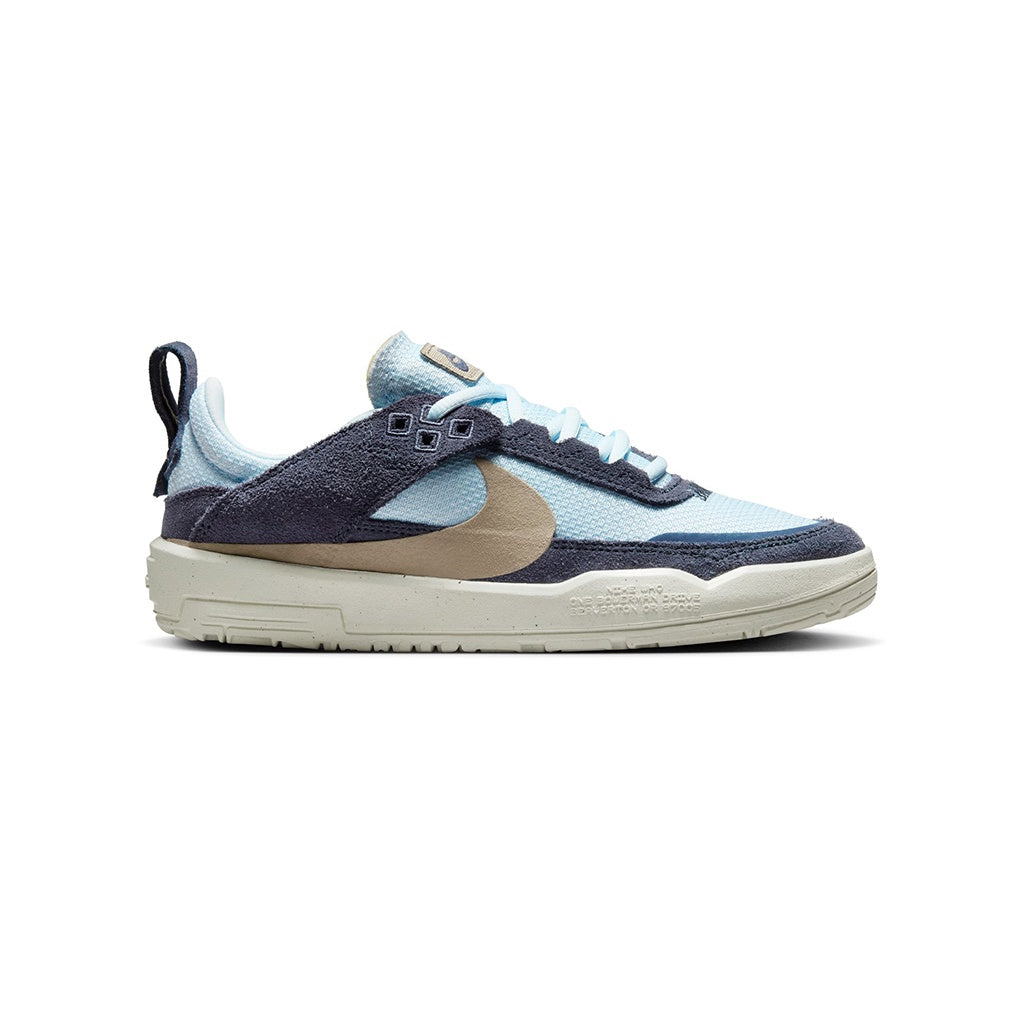


Fit and growth matter more than gendered color
Boys' skate shoes should be selected by foot measurement, secure heel hold and the child's actual skating, not by a narrow boys-only style filter. Many strong youth models are unisex. The product's size scale and chart matter more than the color assigned to the listing.
Growing room should be modest. A shoe that slides, folds or places the flex point ahead of the foot can undermine control. Check fit frequently because children may outgrow the pair before the upper appears worn.
Best first-session lane: flexible reinforced low tops
Youth versions of Vans Skate Classics, Nike SB low tops and other verified skate models can provide quick flex and clear board feedback. Choose suede or reinforced panels in the ollie zone if the child is practicing tricks. Basic canvas lifestyle shoes may wear quickly.
This lane suits smooth flatground, cruising and first skills. A child practicing at larger parks or landing harder may need more structure. Exact youth construction can differ from the adult version, so inspect the specific product.
Best impact lane: moderate youth cupsoles
Structured skate shoes can make repeated park landings feel steadier. Look for a secure cupsole, manageable weight and cushioning that does not make the board feel disconnected. The largest puffy shoe is not automatically the safest or easiest.
Child weight and terrain affect how much structure is useful. Let the rider compare a flexible and supportive pair when possible. Comfort should mean natural toe position and stable movement, not just soft padding.
Measure instead of guessing from age
Children of the same age can have very different foot lengths and widths. Measure both feet while standing, use the larger measurement and consult the exact brand chart. Youth, men's and women's scales can overlap, and retailer presentation is not always identical.
Test indoors with normal socks. The heel should remain centered during bending and side steps. If the child immediately wants to remove the shoe, investigate pressure rather than promising it will break in.
Durability should match the child's wear pattern
New skaters can repeat one trick hundreds of times, concentrating abrasion. Suede, protected toes and sensible lace placement help. A shoe used mostly for school may wear at the outsole and heel instead of the ollie zone.
Inspect weekly. Replace torn laces and patch early thinning only with products used according to their labels. Retire the pair when the sole becomes unstable, the foot outgrows it or interior damage exposes pressure points.
Avoid buying too large for value
A much larger shoe may last through growth on paper but perform poorly now. Excess length causes sliding and can catch during pushing. The better value is a secure current fit in a practical, replaceable model.
Affordable should describe total usefulness, not the lowest listing. A slightly stronger upper can outlast two fragile casual shoes. Avoid prices in evergreen content and let Amazon show current options.
Keep school and skate use realistic
A crossover shoe can work for school and sessions if it is comfortable for ordinary walking and durable enough for grip tape. Very thin soles may feel firm all day; puffy shoes may feel warm. Ask the child which discomfort appears rather than choosing solely from appearance.
If one pair serves both jobs, allow it to dry fully and monitor odor and wear. A rotation can extend life when practical, but the shoes should remain fitted to the same current measurement.
Make the purchase a shared fit decision
Adults can confirm measurements and return terms, while the child reports pressure, heat and heel movement. Ask specific questions instead of only asking whether the shoe feels good. A child may select the most exciting color even when another model fits more securely.
Keep protective equipment separate from the footwear decision. Shoes do not replace a helmet, pads, a suitable practice surface or supervision appropriate to the child's level. If pain continues after the shoes come off, stop skating and seek qualified guidance rather than buying a more padded pair and continuing.
Record the measured length, chosen size and purchase date. That simple note makes the next growth check more objective and helps identify whether the child outgrew the shoe or the model's shape never worked.
Final boys' picks by stage
Choose a flexible reinforced low top for first skills, a moderate cupsole for mixed park sessions and a durable technical model for frequent trick practice. Use unisex models whenever the conversion and fit work; do not restrict the child to a gendered collection.
Verify the exact youth product, size scale and upper on Amazon. The right pair helps the child forget the shoe and focus on balance, progression and enjoyment.
People also ask
Questions that extend this decision
Best Boys' Skate Shoes: Picks by Fit and Session: How much growing room should boys' skate shoes have?
Leave modest toe room without heel slip or an incorrect flex point. Check fit frequently rather than buying far too large.
Best Boys' Skate Shoes: Picks by Fit and Session: Can boys wear unisex skate shoes?
Yes. Use the exact size conversion and judge fit. Performance is not limited by the gender label on a colorway.
Best Boys' Skate Shoes: Picks by Fit and Session: What material lasts best for a child learning ollies?
Suede or a reinforced abrasion zone is a practical choice. Unreinforced canvas can wear quickly under repetition.
Best Boys' Skate Shoes: Picks by Fit and Session: Should a child use cupsole or vulcanized shoes?
Vulcanized shoes offer easier flex; cupsoles add structure. Choose according to terrain, landing force and what feels stable. Let the child compare both indoors instead of deciding from the category name.
Final verdict
Choose the tradeoff you understand.
The best boys' skate shoes are the pairs that meet this exact need without giving up secure fit, predictable grip or the protection your sessions require. Fit comes first, the repeated session demand comes second, and the exact current product identity comes third. Use Amazon to verify sizes and options without relying on stale price or stock claims.
As an Amazon Associate, we may earn from qualifying purchases.
Check current options on Amazon