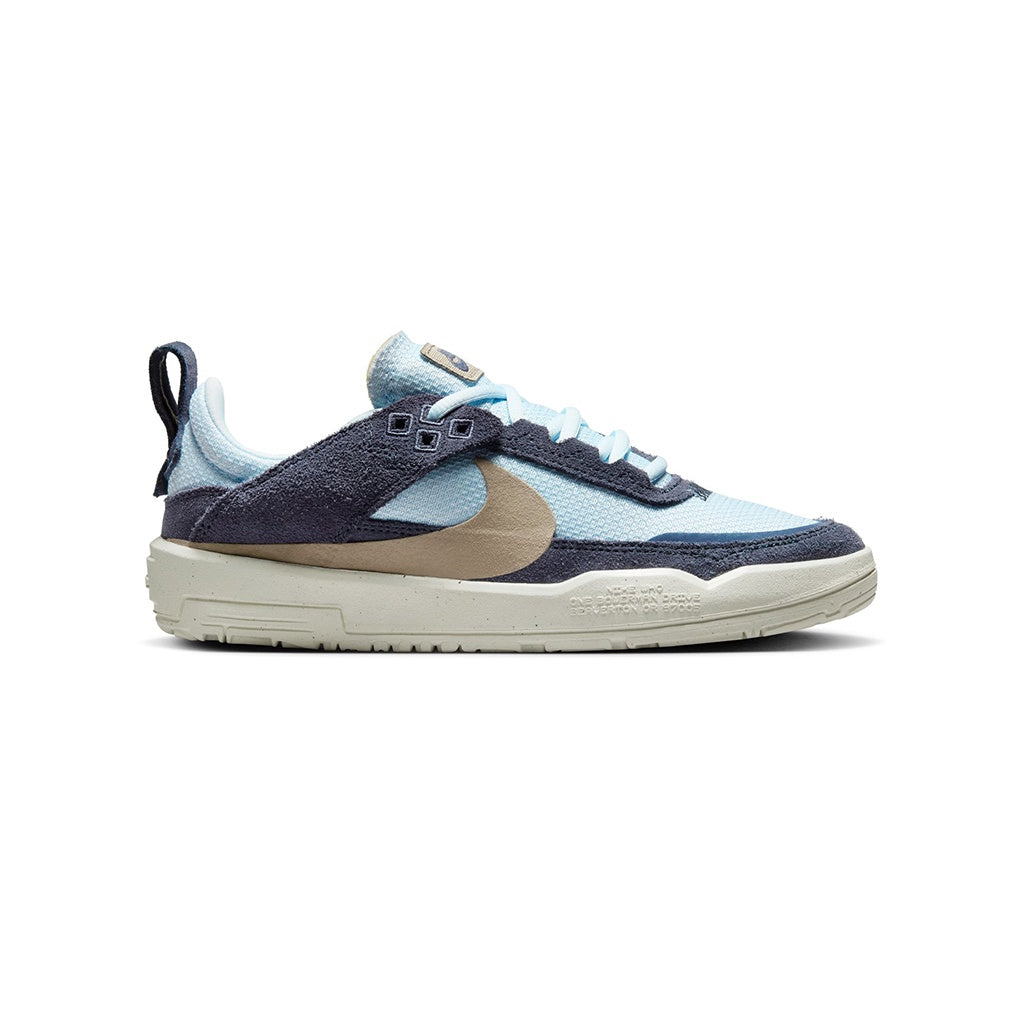


Start with a real skate shoe in the child's current size
The best kids' skate shoe is not the smallest version of an adult trend. It is a secure, flexible shoe that fits the child's feet now and uses construction appropriate for learning. A flat grippy sole, stable heel and durable toe matter more than a pro name. Youth-specific listings also make size labels and proportions easier to understand.
Children's feet change quickly, so measure both before every replacement rather than repeating the old size automatically. Use the larger foot and the maker's current youth chart. Leave enough room for toes to lie flat and move, but not so much that the heel lifts or the foot slides during stopping. Buying excessive growth room reduces control and can create friction.
Best beginner lane: balanced low-tops
For learning stance, pushing, turning and small ollies, a moderately cushioned low-top is a practical starting point. The child can feel the deck without carrying a heavy technical shoe. Suede or reinforced mixed-material uppers handle early grip-tape contact better than thin mesh, while laces or secure hook-and-loop closures keep the foot centered.
Vans Skate youth models, Nike SB big-kids options, adidas skate youth shoes, DC and etnies youth models are sensible model groups when exact products are verified. Brand alone is not a pick. Confirm that the listing is a skate version, not merely a skate-inspired casual sneaker, and check the exact upper and size run.
Best durability lane: reinforced suede and protected toes
A child practicing ollies can wear one side of the front shoe surprisingly fast. Look for suede in the flick zone, internal backing, reduced exposed seams and a rubber edge that is not already separating. Darker colors hide abrasion, but color does not make the shoe stronger. Canvas can work for cruising but usually needs more reinforcement for repeated tricks.
Inspect shoes weekly. Patch a shallow wear spot before it becomes a hole, replace frayed laces and let damp pairs dry naturally. Do not wait until the outsole is smooth or the upper opens to the sock. A rotation can extend calendar life, but growing feet may make a second identical pair unnecessary.
Best impact lane: supportive youth cupsoles
Children attempting drops, stairs or faster transition may benefit from a structured cupsole and meaningful heel cushioning. The platform should still flex at the forefoot and fit securely. Bulky padding can feel protective but adds weight and may hide heel movement, so test movement rather than judging softness with a thumb.
No shoe makes high-impact skating risk-free. Skill progression, supervision, appropriate terrain and protective equipment remain more important. Ongoing heel, ankle or foot pain should stop the session and be assessed by a qualified professional. Footwear selection is not treatment.
Closures should match independence and fit
Laces offer the most adjustment and are easy to replace, but they must stay tied and away from wheels. Slip-ons eliminate broken laces yet depend on exact heel and instep fit. Hook-and-loop closures can help younger children put shoes on independently, though the strap must hold during movement and the rest of the shoe still needs skate-ready structure.
Practice tying and tucking laces before skating. Do not wrap laces around the ankle or over-tighten to stop a wrongly sized shoe from moving. A secure closure supports a correct last; it cannot correct excess length or insufficient width.
Youth, women's and unisex sizing need careful translation
Older kids may find the same model in big-kids, women's, men's or unisex labels. Conversions differ by brand, and the number on the box is less reliable than foot length. Use the official chart for the exact listing and audience. Do not apply a generic men's-to-women's conversion when the maker provides a specific table.
A child with a wide foot should seek an explicit width option or a verified roomier model. Sizing up only for width can make the shoe too long. Thick socks and replacement insoles change volume, so include them during fit checks. Recheck every few months and whenever the child reports pressure.
How to shortlist exact products without overbuying
Build a three-pair shortlist: one balanced beginner model, one durability-first option and one more cushioned alternative. Compare fit first, then construction and material. Avoid collecting multiple pairs in a growth spurt unless returns and future sizing are clear. Current Amazon size availability should be checked on the exact product page.
the products shown should show the exact youth shoe and image, not an adult counterpart. The CTA should say Check Youth Sizes on Amazon, without claiming a size is in stock. Read the exact model review if the child has unusual width, strong impact needs or a history of destroying one zone quickly.
Final choice for a young skater
For most beginners, choose a correctly fitted low-top with a flat grippy sole, suede or reinforced toe and moderate cushioning. Move toward a cupsole when terrain and landings demand more protection, and toward a thinner shoe when the child specifically wants more board feedback. Replace the pair when structure, tread or fit is gone.
Let the child report pressure and heel movement instead of choosing only by color. A shoe they like is more likely to be worn, but comfort and control come from shape. The best kids' skate shoe is the verified current model that fits today, matches the session and can be replaced without guessing when growth arrives.
People also ask
Questions that extend this decision
Best Kids' Skate Shoes: Picks by Fit and Session: Should kids size up in skate shoes for growth?
Allow normal toe room, not excessive length. Too-large shoes can slide and reduce control. Measure frequently and replace when needed.
Best Kids' Skate Shoes: Picks by Fit and Session: Are canvas skate shoes good for kids?
They can suit cruising and light use, but reinforced suede usually handles repeated ollie and kickflip abrasion better.
Best Kids' Skate Shoes: Picks by Fit and Session: Do kids need cupsole skate shoes?
Not automatically. Balanced flexible shoes work well for beginners; structured cupsoles become more useful as impact and terrain increase.
Best Kids' Skate Shoes: Picks by Fit and Session: Can kids wear adult skate shoes?
Older children may fit adult or unisex sizes, but use the exact maker chart and verify the shoe's proportions and width rather than relying on a generic conversion.
Final verdict
Choose the tradeoff you understand.
The best kids' skate shoes are the pairs that meet this exact need without giving up secure fit, predictable grip or the protection your sessions require. Fit comes first, the repeated session demand comes second, and the exact current product identity comes third. Use Amazon to verify sizes and options without relying on stale price or stock claims.
As an Amazon Associate, we may earn from qualifying purchases.
Check current options on Amazon