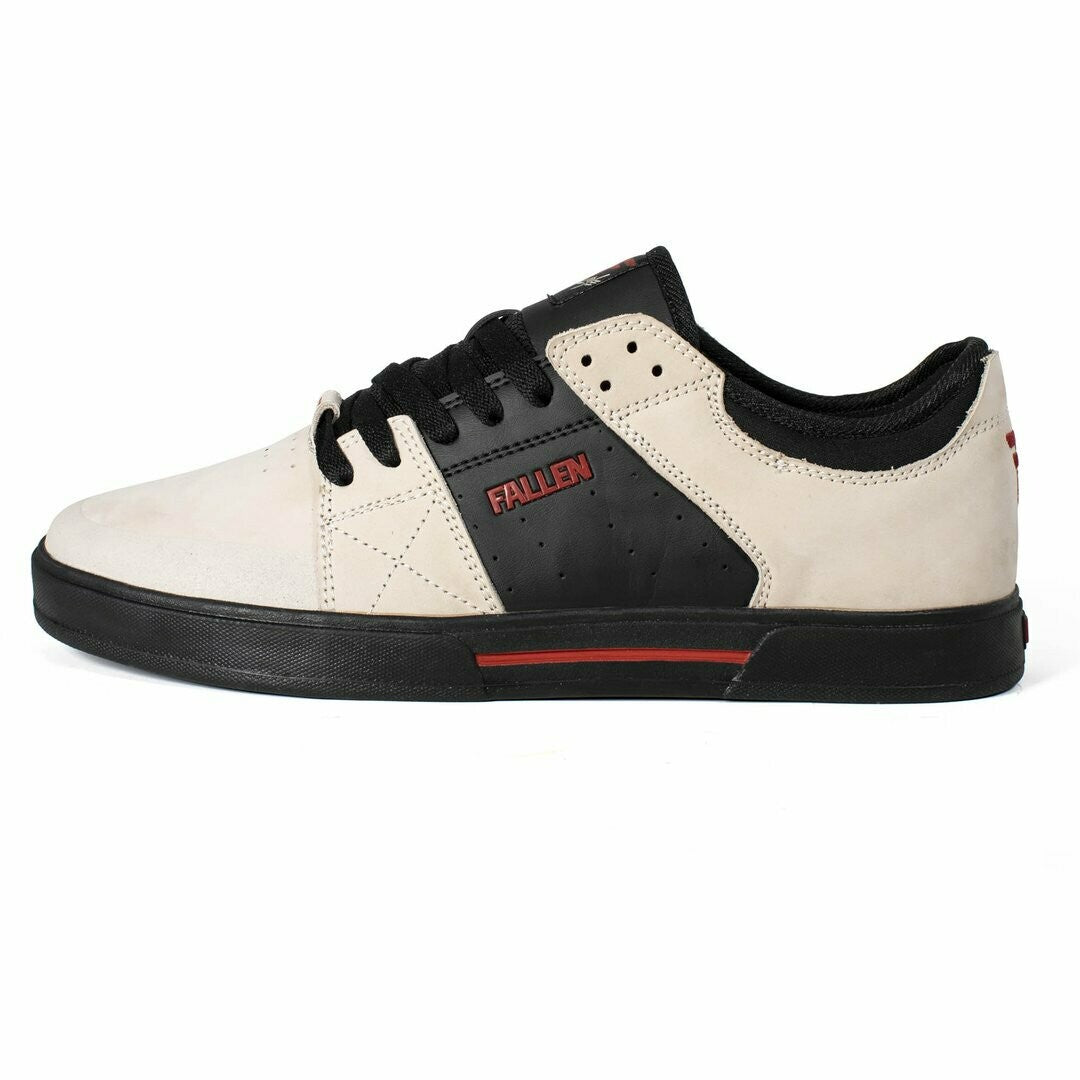
Fallen is rooted in technical street skating
Fallen's identity is closely tied to Jamie Thomas, team-driven skate media, and shoes built for committed street sessions rather than casual styling alone. That heritage explains the brand's continuing appeal, but it should not substitute for examining the current model. Fallen has used padded, supportive silhouettes as well as less bulky directions, so a logo cannot settle board feel or impact protection. Start with the exact family, upper, and sole shown on the listing. The useful question is whether that construction supports the rider's terrain and foot shape, not whether the shoe resembles a remembered team-era release.
The catalog spans different amounts of structure
A support-forward model can use a substantial tongue, collar padding, and cupsole-like platform to create a held-in feel. A lower-profile Fallen option will bend sooner and communicate the board more directly. Compare models along that spectrum rather than describing the entire brand as puffy. More material can stabilize landings and shield the foot, but it also adds warmth, weight, and break-in. Less material improves movement and may expose the rider to greater impact. The best Fallen candidate is the one whose construction answers the normal session, even when another silhouette is more strongly associated with the brand's history.
Padding changes fit as much as protection
Tongue and collar foam occupy internal space. Skaters with higher insteps can feel pressure before the labeled length is short, while narrow heels may still move inside a visibly padded opening. Try the pair with skating socks, lace from the forefoot upward, and crouch before judging. The heel should stay seated without crushing the top of the foot. Toes should remain natural and the sole should flex with the foot. Do not add length simply to escape padding pressure. Another Fallen shape—or a thinner model from a different brand—may provide security without forcing an awkward size.
Durability depends on the upper map
Fallen's technical reputation makes abrasion resistance a reasonable expectation to investigate, not a guaranteed lifespan. Check suede coverage, toe seams, hidden backing, lace exposure, and the bond where upper meets sole. A broad panel can spread flick wear, while an edge located directly under grip tape can open quickly. Exact colorways may change materials, so confirm the selected pair. After early sessions, inspect the first polished patch and raised thread. Thin preventive repair can help local wear; it cannot make smooth tread, separated bonding, or collapsed cushioning safe for another hard session.
Board feel and impact occupy opposite ends
A structured Fallen shoe may appeal to riders repeating stairs, gaps, or rough transition because the platform isolates more force and keeps its shape. That same build can feel distant to someone practicing technical flatground. A flexible model can deliver quicker feedback but gives up some landing isolation. Compare one support-heavy Fallen model with one leaner control at the same fit quality. The contrast reveals whether added structure is genuinely useful or simply familiar. No amount of heritage determines this choice; the rider's hardest repeated landing and preferred flex timing should decide which compromise remains acceptable.
Current availability requires exact names
Revived and heritage brands can generate a mixture of active models, older inventory, and marketplace titles that omit important version details. Match the complete product name, ASIN, photographs, material, and size rather than assuming every Fallen result belongs to a current supported line. One isolated pair does not establish a full size range. Check seller and return terms at Amazon, particularly for older stock whose foam, rubber, or adhesive may have aged. Scarcity is not a reason to accept the wrong length or uncertain condition; use the brand hub to find a current alternative with the same functional lane.
Who should put Fallen on the shortlist
Fallen deserves consideration from skaters who value team-era authenticity and can identify a current model whose protection, fit, and upper layout match their needs. Support-oriented riders should compare its structured shoes; board-feel shoppers should seek the brand's leaner options and keep a flexible competitor visible. People with low-volume feet, heat concerns, or an immediate-flex preference should reject heavily padded models unless try-on evidence proves otherwise. The final verdict is model-first: choose Fallen when the exact pair wins on shape and session demands, with heritage serving as context rather than the reason to overlook a practical weakness.
For a fair brand trial, choose one Fallen silhouette that represents the intended lane and one outside control with similar sole construction. Compare heel hold, toe shape, tongue movement, flex location, lace exposure, and the first visible abrasion after equal sessions. That method reveals whether the model's extra volume or support is genuinely useful. It also prevents a rider from judging the entire current range through an old memory or a single pair selected mainly for its graphics.
People also ask
Questions that extend this decision
Fallen Skate Shoes Review: Strengths, Tradeoffs and Best Models: Is Fallen an active skate-footwear brand?
Fallen has returned through current model activity and its revived heritage. Verify availability and construction on the exact model rather than relying on old catalog memory.
Fallen Skate Shoes Review: Strengths, Tradeoffs and Best Models: Are all Fallen skate shoes heavily padded?
No. The brand is known for supportive technical footwear, but padding and sole structure vary by model. Compare exact silhouettes.
Fallen Skate Shoes Review: Strengths, Tradeoffs and Best Models: Why is Jamie Thomas associated with Fallen?
Fallen was built around Jamie Thomas and a team-centered skate identity, which remains central to how the brand is remembered.
Fallen Skate Shoes Review: Strengths, Tradeoffs and Best Models: Who benefits from a structured Fallen model?
Riders repeating impact-heavy street or transition sessions may value the support, provided heel hold, toe room, and flex align with their feet.
Final verdict
Choose the tradeoff you understand.
Fallen earns a place in the catalog only where its skate construction and current model identity are clear; the right choice still depends on fit and sole type. Fit comes first, the repeated session demand comes second, and the exact current product identity comes third. Use Amazon to verify sizes and options without relying on stale price or stock claims.
As an Amazon Associate, we may earn from qualifying purchases.
Check current options on Amazon